
By Simphiwe Bangani

Every year, when matric results are announced in January, South Africans erupt in celebration. Families ululate, neighbours cheer and thousands of learners feel that spark of hope that says, this is it. My life starts now. Bags are packed, course lists are checked and some begin planning for the campus life they have always imagined.

But for many, the excitement quickly slips into uncertainty. One moment they are full of dreams, the next they are stuck waiting for a call that never comes, an email that never arrives, or provisional offers that are declined as their final results do not measure up to the competition.

Twenty-year-old Yonwabani Madikane is one of those learners.

Today, while many of his former classmates are in lecture halls, Yonwabani spends his days doing house chores, looking after his siblings and guarding cattle.

"Like others, I wanted to go to university and start building my future, hoping to inspire someone out there," he says.

Yonwabani did receive an offer from the University of Fort Hare, but it was not for a course he chose himself.

"My cousin applied for me and I got an offer to study Chartered Accountancy. Sadly, accounting is not a field I want to explore, and I do not want to find myself failing at university," he explains.

Public universities are projected to offer about 235 000 first-year spaces. That is roughly three places for every ten students who wrote matric in 2025.

Higher Education Minister Buti Manamela highlighted a national shortfall in available places at universities and colleges. The public system (universities, TVET and Community Education and Training Colleges) can take about 525 000 of the 850 000 candidates who wrote matric in 2025. In simple terms: even if every learner achieved a Bachelor's pass, only around six out of every ten would find a seat.

In the Eastern Cape, South Africa's poorest province by poverty headcount, 103 975 learners wrote matric in 2024. Only 45 662 earned a Bachelor's pass that could get them into university.

With the odds stacked like this, many learners hedge their bets and apply to as many universities and colleges as they can, often hundreds of kilometres from home. That means leaving behind family, friends, teachers and community support, and relying almost entirely on the National Student Financial Aid Scheme (NSFAS) to get by. NSFAS will only fund about 800 000 qualifying students in 2026.

Why universities say no?

According to Nelson Mandela University's access and enrolment manager, Johanna Messiah, the Gqeberha (formerly Port Elizabeth) based institution had already received more than 200 000 applications for first-year intake by May. The university only has space for about 8 000 first-years.

Messiah explains that Mandela University, like the University of Johannesburg and others, uses a provisional acceptance system. Students who meet the minimum requirements when they apply, receive a conditional offer. Once final matric results are out in January, applicants are ranked from the top to the worst performers. Only the top performers are admitted, depending on space in each programme.

"With the new system, there is no guarantee that a learner will be accepted, even if they applied early," she says. Getting the minimum Admission Points Score (APS) for university may get you conditionally accepted, but it is no guarantee that you will get a place come January. To get in, you have to rise above the crowd during your matric exams. A Bachelor's Pass only is not enough.

"In terms of capacity, we would need a very big university that could accept every eligible student, but we cannot take more than we can handle," Messiah says. Her point underscores the need for new institutions and greater investment in higher education. However, public higher education budgets are not growing and universities are increasingly dependent on students whose main funding source is NSFAS.

School principal sees another angle

Mxolisi Mavenge, acting principal of Sukude Senior Secondary School in rural Ntabankulu, Eastern Cape, guided his school to a 93.9 percent matric pass rate in 2024. He believes that a lack of proper career guidance is a major reason many post-matriculants struggle to find their feet.

"Some learners choose careers they do not qualify for. Others do not have the skills needed to find work. Limited access to finance, technology and network coverage makes applying difficult. Many also suffer from a lack of motivation and inspiration, unrealistic expectations and isolating themselves instead of reaching out to people already doing what they want to do," he says.

Finding the missing pieces

Mavenge believes that better career guidance would help learners choose programmes wisely. "The Department of Basic Education should strengthen partnerships between high schools and higher education institutions, and provide counselling so learners can tackle upcoming challenges," he says.

Research published in the African Journal of Career Development found that learners who received career guidance from Grade 9 felt it made a real difference. That alone shows how important early guidance is.

Messiahâ's message to current matriculants is simple: "do not look down on TVET colleges. "The country needs technical students. Going to a TVET college does not mean you are not intellectually gifted," she says.

Mavenge encourages learners to set realistic goals, seek help when applying for higher education and stay focused even when things do not go according to plan.

Yonwabani has his own message for his peers: "Work hard and never stop dreaming, no matter how tough it gets."

Former President Nelson Mandela once said, "Education is the most powerful weapon which you can use to change the world. "If South Africa can sharpen that weapon and open more doors, today's youth might still change the world, even if their dreams are on hold for now.

Matriculants who want to improve their matric results can visit the Department of Basic Education's Second Chance Programme's website for more information: https://www.education.gov.za/secondchance/

Article provided courtesy of the Khulani! Youth Journalism project

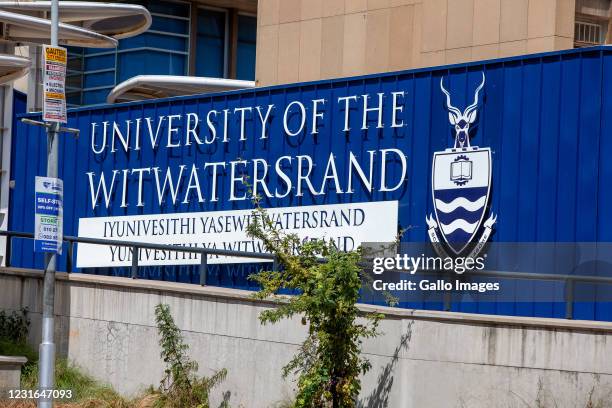
Image: Getty Images.

Why universities reject you and what comes next?



Nyakaza Media Solutions - Yo School Magazine
Nyakaza Media Solutions, founded to empower schools, helps learners research, write, and publish newsletters, bulletins, and maintain websites. With a mission to promote dialogue on issues affecting young people, the organisation encourages learners to celebrate excellence, embrace growth, and strive for greatness. Nyakaza Media Solutions aims to foster better individuals and future South African leaders through positive and productive behaviour.