By Hazel Namponya
Betrayal in leadership and political spaces is rarely loud or theatrical and it almost never arrives with open confrontation or clear explanations.
More often, it unfolds quietly, through decisions that are not communicated, meetings that happen without you, ideas that travel ahead of you without your name attached and relationships that suddenly cool at the moment you most need support.
In the corridor of power, betrayal is rarely an emotional outburst; it is a process, one that is polite, procedural and often carefully disguised as professionalism.
What makes betrayal in leadership particularly difficult to identify is that it does not always involve overt hostility. Many leaders experience it as a slow realisation that something has shifted.
A promise that was once firm becomes vague. Support that was once visible becomes conditional. People who once spoke openly with you begin to hedge, to distance themselves, or to frame their withdrawal as neutrality.
Over time, you are left questioning not only your position, but your judgment, your sense of reality and your place within the system you helped sustain.
In leadership spaces, betrayal takes several recognisable forms. One of the most common is extraction, where an individual is encouraged to contribute ideas, labour, networks and credibility, only to be quietly removed once their value has been absorbed.
The work continues, but the worker disappears from view. Another form is the public-private split, where support exists behind closed doors but evaporates in formal settings, leaving the individual exposed while others maintain plausible deniability.
There is also sacrifice, where a person is positioned as expendable in order to protect senior figures, stabilise an institution, or manage external pressure.
Perhaps the most widespread form, however, is silence, when people who know the truth choose not to speak, not to intervene and not to correct false narratives, allowing harm to take place without ever appearing to cause it.
Finally, there is slow exile, a quiet removal achieved through exclusion from information, decision-making and influence, rather than through formal termination.
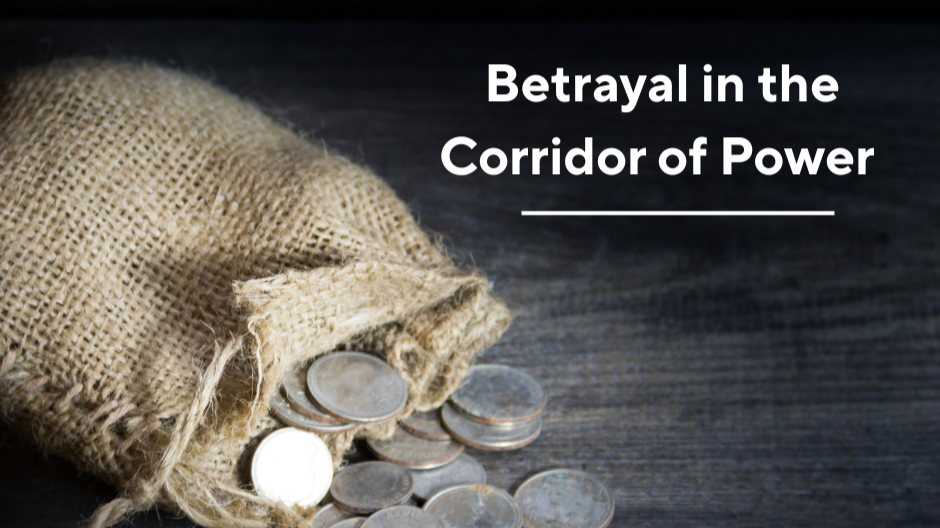
Image: By Hazel Namponya