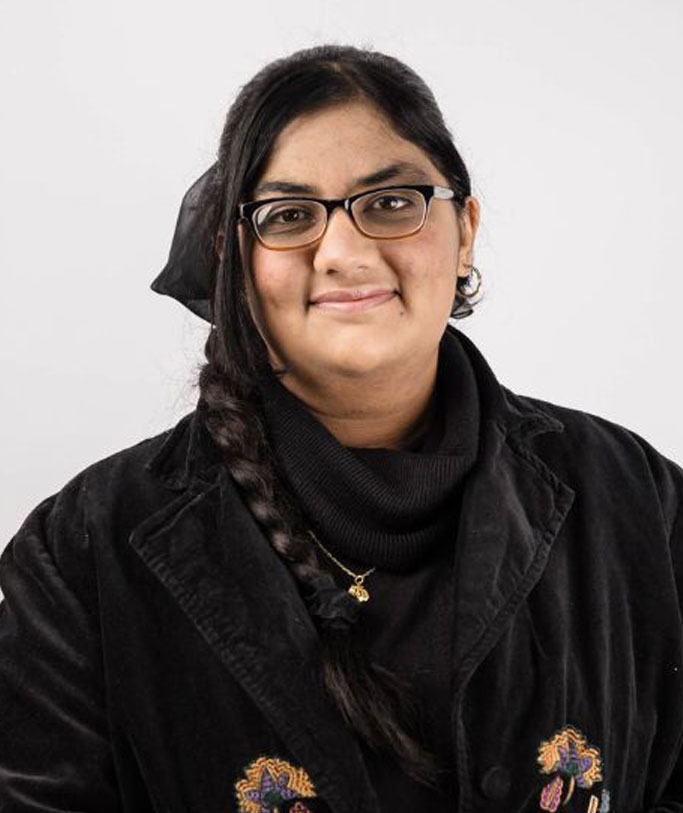
By Dr. Pakeezah Rajab
South Africa’s mathematics crisis is real and urgent. Our Grade 5 and 9 learners consistently rank in the bottom five countries internationally on the Trends in International Mathematics and Science Study (TIMSS), and this is despite the fact that most other countries test Grade 4 and 8 learners.
Too many learners are avoiding pure mathematics in favour of mathematical literacy, and in doing so, are quietly closing doors to careers in science, technology, engineering, economics, and medicine before they have even fully opened.
The Real Challenges: It’s Not Just About Being “A Maths Person”
Perhaps the biggest misconception about mathematics is that success depends almost entirely on intelligence, or how smart you are when it comes to maths and sums. In reality, yes, ability matters, but it is only one piece of a much larger puzzle. Equally important are how learners’ study, how they feel about mathematics, and the environments in which they learn.
Mathematics anxiety is one of the most underestimated barriers in South African classrooms. Many learners experience genuine fear and dread at the prospect of a mathematics test, not because they lack ability, but because nobody has ever helped them manage that fear.
When anxiety goes unaddressed, even capable learners underperform, disengage, and switch to mathematical literacy because it feels safer.
Attitudes matter too. Learners who believe mathematics is useful, who find meaning in it, and who feel a sense of belonging in the mathematics classroom are significantly more likely to persist through difficulty.
When the subject feels irrelevant or hostile, disengagement follows, regardless of ability. The shortage of qualified mathematics teachers compounds everything. A learner who never experiences an inspiring, confident, well-prepared mathematics teacher may never discover what they are truly capable of.
What Learners Can Do?
Your mindset and your study habits matter more than you think:
• Do not avoid mathematics because it is difficult. If you reflect on your maths history, often where you once struggled is exactly where you’ve had the opportunity to grow the most.
• Develop a study routine. Mathematics requires consistent practice, not last-minute cramming. Little and often is far more effective.
• Seek help early. If you do not understand something, ask your teacher, a peer, or look for resources online. Falling behind in mathematics is easy to prevent but hard to recover from.
• Know that intelligence is not fixed for life. Research consistently shows that with the right effort and strategies; mathematical ability can be developed. You are not “not a maths person.”
What Teachers Can Do?
Teachers are a powerful lever for change in this crisis. The research is clear: how you teach matters as much as what you teach. A few evidence-based shifts can make an enormous difference:
• Create a low-threat classroom. Mistakes should be celebrated as learning opportunities, not sources of shame. Reducing the fear of failure is one of the most effective ways to improve engagement and performance.
• Build on strengths. Know your learners. Some are deep processors who need time to think; others are more impulsive and competitive. Adjust your teaching to accommodate different learning styles.
• Make mathematics meaningful. Connect it to real-world problems, careers, and everyday life. Relevance builds motivation.
• Explicitly teach study skills. Many learners simply do not know how to study mathematics effectively. Teaching them to plan, self-monitor, and seek help is as important as teaching content.
What Parents and School Governing Bodies Can Do?
Parents often do not realise how much their attitudes toward mathematics shape their children’s beliefs. If you regularly say “I was never good at maths either,” you are inadvertently giving your child permission to disengage.
Instead:
• Talk positively about mathematics and its value for future opportunities.
• Encourage persistence. When your child struggles, resist the temptation to immediately suggest they switch to mathematical literacy. Struggle is part of learning.
• Advocate at the school level. SGBs should push for consistent, qualified mathematics teachers and resist frequent teacher changes that disrupt continuity.
• Support enrichment activities such as maths clubs, competitions, and tutoring programmes, which can dramatically change a learner’s relationship with the subject.
What the Department of Basic Education Can Do?
Systemic change requires systemic action. The DBE cannot leave this crisis to individual schools and teachers alone. They need to:
• Prioritise the training and retention of qualified mathematics teachers. This means better salaries, meaningful mentorship, and subject-specific professional development, not just generic workshops for generic teachers.
• Reconsider the ease of switching to mathematical literacy. The decision should be deliberate, guided, and based on evidence of what is best for the learner and their future career paths and potential.
• Incorporate psychological support into schools. Mathematics anxiety is a real, diagnosable phenomenon. School counsellors and teachers need training to identify and support anxious learners.
• Invest in South African-specific research. International studies are valuable, but what works in Finland or Singapore does not always translate to Alexandra or Soweto. We need more evidence that speaks to our context.
• Build national pride around mathematics. Campaigns that celebrate mathematical achievement, spotlight role models, and connect the subject to national development can shift culture over time.
The Bottom Line
Improving South Africa’s mathematics outcomes is not about finding the “naturally gifted” learners or simply teaching content more efficiently.
It is about recognising that mathematical success is shaped by multiple factors in our ecosystem, many of which we have the power to change.
Intelligence matters, but how you study, how you feel about the subject, what you believe about your own ability, and the support you receive all contribute significantly to the outcome.
Every learner has the potential to succeed in mathematics. The question is not whether they can, but whether we are collectively giving them the tools, support, and belief they need.
With the right approach, at every level of the system, we can transform this crisis into an opportunity. South Africa’s future depends on it.
Dr. Pakeezah Rajab is a Research Psychologist, whose doctoral research at the University of Pretoria focused on identifying the psychological factors that improve mathematics achievement in Grade 9 learners in Gauteng.