By Mzukona Mantshontsho
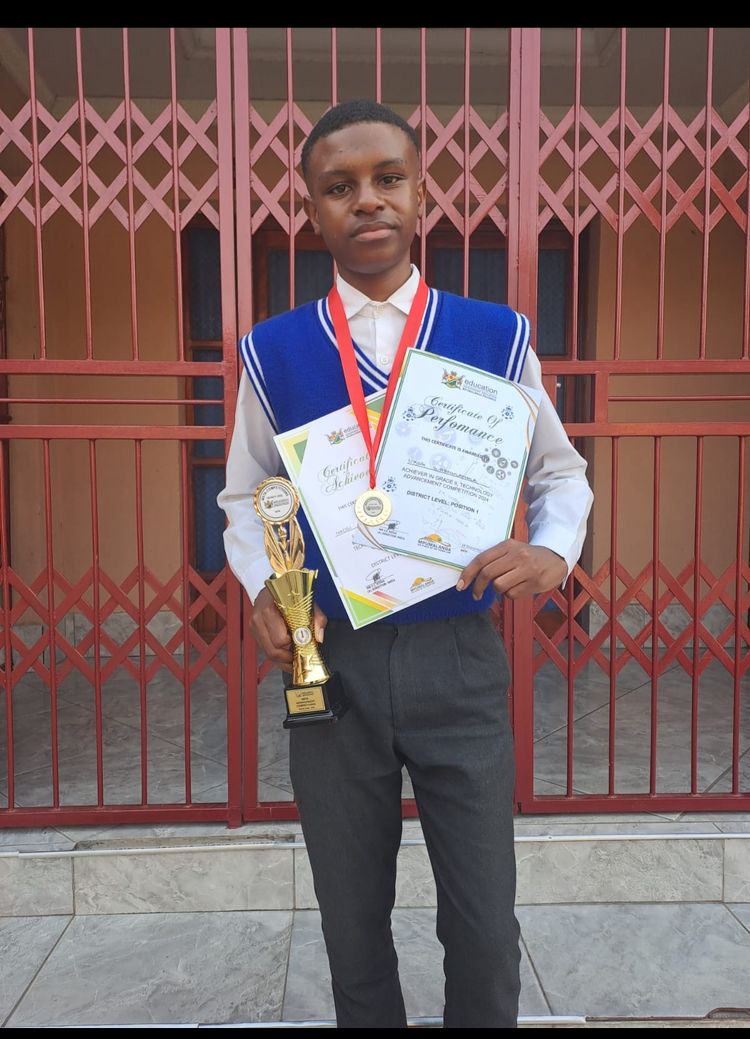
SNENHLANHLA NKOSI will be travelling to Stockholm, Sweden in August 2026, to represent South Africa at the Stockholm Junior Water Prize.
What is at the centre of the project you submitted?
Preventing contamination before it happens. Plastic containers can release micro plastics and potentially harmful chemicals into the products we use every day. Instead of trying to remove those contaminants after they have entered the environment, I wanted to create a barrier that stops them from entering in the first place. The result was a food-contact silicone-based coating designed to reduce contamination directly at the source.
How did your upbringing lead to your journey as a young scientist, brother, and son today?
I grew up with a strong curiosity about how things work and how problems can be solved. My family and teachers encouraged me to value education and perseverance. As a brother, son, and student, I learned that responsibility and hard work are important. Those lessons helped me continue working on difficult projects even when progress was slow or challenges seemed overwhelming.
What is your view in terms of success in entrepreneurship?
Entrepreneurship is about creating solutions that improve people’s lives. Success is not only measured by money or business growth, but by the positive impact that a product or idea has on society. If an innovation solves a real problem and benefits people, that is meaningful success.
Tell us about your early life
I am currently a learner at Sitintile Secondary School in Mpumalanga. I have always been interested in science, technology, and innovation. Much of my learning has come from independent research, reading scientific literature, participating in competitions, and developing projects outside of the classroom. These experiences have helped me build practical research and problem-solving skills.
What does representing South Africa mean to you and your school?
Representing South Africa at the Stockholm Junior Water Prize is a tremendous honour. It is an opportunity to showcase the innovation and talent that exists within our country. For my school, it demonstrates that learners from any background can compete on an international stage when they are given opportunities and support.
What are the most critical resources for your successful leadership?
Curiosity, persistence, and support from others. No project succeeds alone. The guidance of teachers, encouragement from family, access to educational resources, and the willingness to keep learning are all essential.
What can we expect from you going forward?
I plan to continue developing technologies that address important challenges in areas such as environmental sustainability, health, science, and engineering. I want to build on the foundation created by this project and contribute to innovations that have meaningful global impact.
What are your words of advice for young people, particularly young girls, to take that first step and start community projects or small businesses?
Do not wait until you feel completely ready. Start with what you have and learn as you go. Many successful projects begin as small ideas. Believe that your perspective is valuable, ask questions, seek guidance, and do not be discouraged by setbacks. Every challenge is an opportunity to learn.
What is the legacy that you would want to leave when you retire?
I would like to be remembered as someone who helped solve important problems and created opportunities for others. I hope to leave behind innovations that improve lives and inspire future generations to pursue science, technology, and entrepreneurship.
How does your work directly contribute to the community?
My project aims to reduce exposure to micro plastics and potentially harmful chemicals from plastic packaging. If successfully developed and adopted, the technology could help improve public health, reduce environmental contamination, and contribute to safer consumer products.
What have been your highs and lows of your project?
One of the highest moments was winning the South African Youth Water Prize and earning the opportunity to represent South Africa internationally. One of the lowest moments was facing major challenges while developing the invention and filing the provisional patent. There were times when it felt like the project might not move forward, but overcoming those difficulties taught me resilience and determination.
How can people assist you as you wait to travel?
People can support young innovators by providing mentorship, access to research facilities, sponsorship opportunities, technical guidance, and encouragement. Supporting young researchers helps transform promising ideas into real-world solutions.
Call or WhatsApp Sinenhlanhla Nkosi: +2782 3075876 or email: snenhlanhlankosi540@gmail.com