By Mzukona Mantshontsho
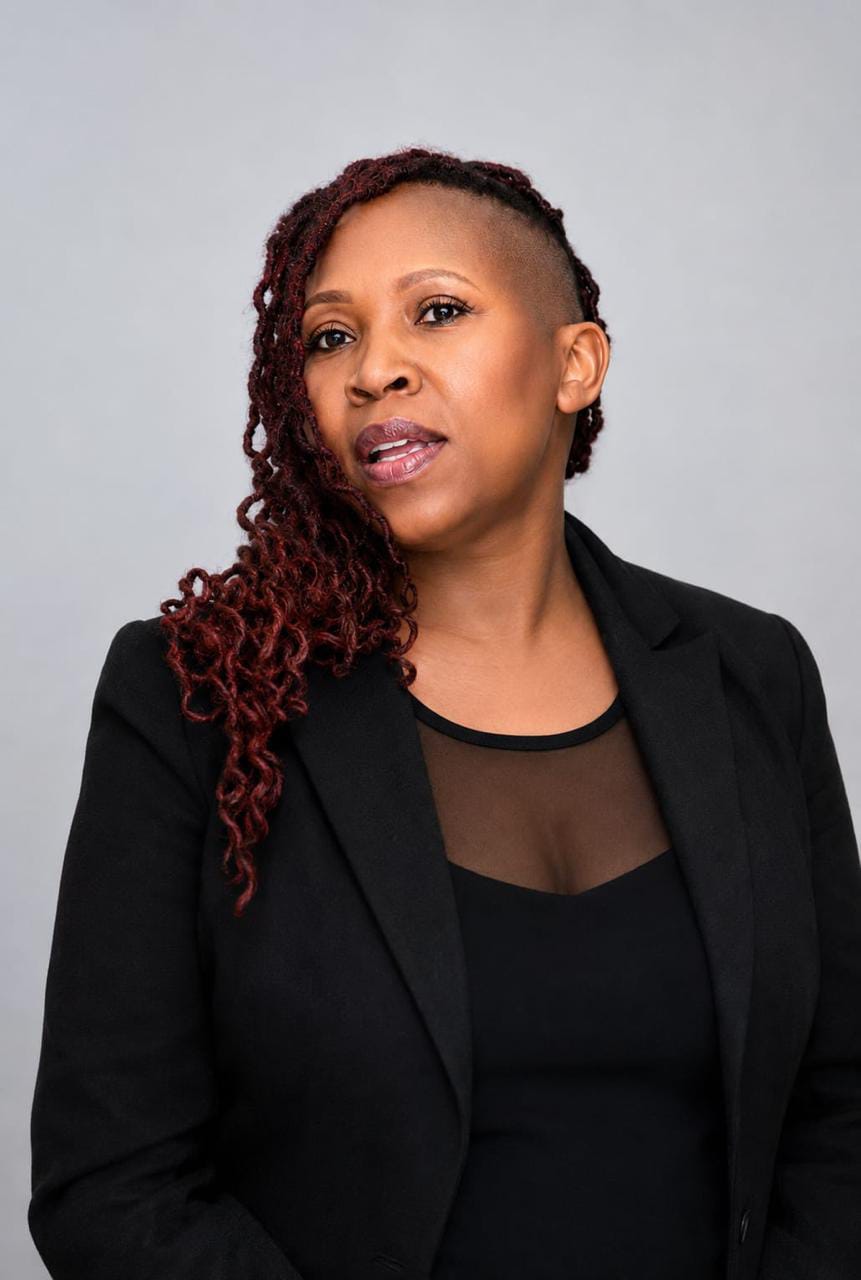
OFENSTE VICTORIA MONTSHIWE started Mjojo Finance Play with a simple belief: financial education should not feel like a lecture; it should feel like something people can experience, practise and use in real life.
Mjojo Finance Play was created to make money conversations more accessible, practical and engaging, particularly for young people, emerging entrepreneurs and communities that are often excluded from meaningful financial opportunities.
Mjojo Finance Play uses play, storytelling, entrepreneurship education, practical activities and community engagement to help people understand money beyond simply earning and spending it. Mjojo Finance Play wants people to develop the confidence to make better financial decisions, build sustainable businesses and see themselves as capable creators of their own economic futures. Ultimately, Mjojo Finance Play is about moving people from financial awareness to financial action.
Your upbringing to your journey today?
My upbringing shaped many of the values I carry into leadership today such as resilience, responsibility, resourcefulness and the importance of community.
I have always understood that opportunity is not equally distributed. Sometimes you have to start with what you have, learn as you go and create opportunities where they don’t already exist.
Being a daughter and a sister has also taught me that leadership isn’t only about titles. It is about responsibility, showing up for people and understanding that your journey can influence the people coming behind you.
That perspective has stayed with me as an entrepreneur. I don’t want to build something that is only successful for me. I want to build something that creates value for other people.
July was Savings Month, how do we keep the Savings Culture going throughout the year?
Savings Month is useful because it creates awareness, but financial discipline cannot be seasonal. We need to move from Savings Month to a Savings Culture. That starts with making saving realistic and purposeful. People should understand what they are saving for, whether it is an emergency fund, education, business capital, a home, a personal goal or simply greater financial security.
We also need to stop treating financial education as something people only need when they are already earning a lot of money. Young people need to learn about saving, budgeting, debt, investing and entrepreneurship before they enter the workforce.
At Mjojo Finance Play, we believe that small amounts, consistently managed, can build powerful habits. The goal isn’t perfection; it is developing a relationship with money that is intentional.
What is your view of success in entrepreneurship?
Success in entrepreneurship is bigger than revenue, although financial sustainability is essential.
Success is being able to solve a real problem, create value for people, build something sustainable and create opportunities for others while remaining true to your purpose.
Entrepreneurship is not always glamorous. There are moments of uncertainty, rejection, experimentation and failure. Success is therefore also about resilience, being willing to learn, adapt and continue.
I believe entrepreneurs should measure themselves not only by what they own, but by the problems they solve, the people they impact and the systems they build.
Your early life to your role today?
My journey has been shaped by both formal learning and practical experience. While education has given me important knowledge and frameworks, entrepreneurship has taught me lessons that cannot always be learned in a classroom. Building Mjojo Finance Play has required me to continuously learn about business development, financial education, entrepreneurship, leadership, communication, partnerships and community engagement.
I have come to appreciate that education doesn’t stop when you leave an institution. As an entrepreneur, you have to become a lifelong learner.
That is also why I am passionate about entrepreneurship education. I believe institutions of higher learning have an important role to play in preparing entrepreneurs not only through theory, but through practical exposure, experimentation, mentorship and real-world problem solving.
What does your role mean to you?
Being the Founder and Director of Mjojo Finance Play means carrying both a vision and a responsibility.
It means asking difficult questions: Are we solving a real problem? Are we creating meaningful value? Are we reaching the people who need these tools the most? And are we building something that can outlive me?
Leadership also means being willing to learn from the people around you. I don’t see myself simply as the person at the top of an organisation. I see myself as someone responsible for creating the environment, vision and opportunities that allow the team and the organisation to grow.
What are the most critical resources for your successful leadership?
The most important resources are people, knowledge, relationships, technology, financial resources and resilience. But I would put people at the centre.
You can have a great idea, but you need people who believe in the vision and have the skills to execute it.
Relationships are equally important. Entrepreneurship can sometimes feel like a lonely journey, but partnerships, mentors, peers, clients and communities can open doors and challenge you to think differently.
And perhaps most importantly, you need the willingness to keep learning.
What can we expect from you going forward since you started?
Mjojo Finance Play is still building, and I believe we are only at the beginning.
People can expect us to continue developing practical, innovative and engaging financial education experiences for young people, entrepreneurs and communities.
We want to expand our programmes, partnerships, educational experiences, masterclasses, games and community activations.
We are particularly interested in reaching young people in underserved communities, emerging entrepreneurs, township SMMEs and young people who are not in employment, education or training.
Our ambition is to build Mjojo into a platform where financial education, entrepreneurship, plays and opportunity meets.
Young people, particularly women, taking that first step to start community projects
Start with what you have. You don’t need to have everything figured out before you begin. Identify a problem around you. Talk to the people experiencing that problem. Start small. Test your idea. Learn. Improve. Ask for help. Build relationships.
And don’t wait for permission to believe that your idea matters.
For young women in particular, I would say: don’t allow the fear of being judged, failing or not being “ready enough” to stop you. Your first version doesn’t have to be perfect. It just needs to exist.
Sometimes the first step is simply saying, “I have an idea, and I’m going to see what happens if I try.
Lessons learnt from COVID-19 in terms of small businesses and sustainability?
COVID-19 showed us just how vulnerable small businesses can be when they depend heavily on one income stream, one customer base, one physical location or one way of delivering their products and services.
One of the biggest lessons is the importance of business resilience. Small businesses should have proper financial records, emergency reserves where possible, diversified revenue streams, strong customer relationships and systems that allow them to operate remotely or digitally when necessary.
They should also understand their numbers; their costs, cash flow, break-even point and how long they can survive if revenue suddenly declines.
COVID-19 reminded us that entrepreneurship is not only about growth. It is also about building something that can survive disruption.
What is the legacy that you would want to leave when you retire?
I would want my legacy to be bigger than Mjojo Finance Play. I would want to know that I contributed to creating a generation of people who understood that their circumstances did not have to determine their future.
If someone can say, “I started my business because Mjojo gave me the confidence to try,” or “I learned how to manage my money because of something I experienced through Mjojo,” then that is legacy.
I want to contribute to a culture where young people see themselves not only as job seekers, but also as problem solvers, entrepreneurs, creators and leaders.
Ultimately, I want to leave behind people who are better equipped because I was here.
How does your work directly contribute to the community?
Our work contributes by taking financial education and entrepreneurship conversations into spaces where they can become practical and accessible.
We focus particularly on young people and communities that may not always have access to traditional financial education or entrepreneurial support.
Through Mjojo Finance Play, we use games, storytelling, activities, workshops and experiential learning to make concepts such as budgeting, saving, entrepreneurship and financial decision-making easier to understand.
We also believe in collaboration. Community transformation cannot be achieved by one organisation alone. It requires schools, businesses, government, civil society, entrepreneurs and communities working together.
What have been the highs and lows of your career?
One of the highs has been seeing an idea move from something I imagined into something that other people can experience and believe in.
Every time someone connects with what we are building, every partnership opportunity, every programme and every young person who becomes more confident about their financial or entrepreneurial future reminds me why I started.
The lows are equally important. Entrepreneurship comes with uncertainty. There are moments when resources are limited, when opportunities don’t materialise, when people don’t immediately understand your vision and when you question whether you are moving fast enough.
But those moments have taught me resilience. I have learned that progress doesn’t always look dramatic. Sometimes progress is simply continuing to build when nobody is watching.
When you are not at work, what do you get up to, and where can people follow you online to join the Mjojo Finance Movement?
When I am not working, I value time with family, connecting with people, learning, exploring new ideas and simply creating space to recharge.
Entrepreneurship can consume you if you allow it to, so I have also learned the importance of stepping away from the business sometimes and remembering that there is a life beyond the work.
Mjojo Finance Play is not just about teaching people about money. It is about helping people see what is possible when they understand money, develop skills and take action.
For people who want to follow the Mjojo Finance Movement, they can connect us through our LinkedIn platform or email us at mjojofinanceplay@gmail.com
I leave young people with one message:
You don’t have to wait until you have everything to start. Start with what you have, where you are, and learn along the way. Your idea may not be perfect. Your resources may be limited. You may not have all the answers. Start anyway. Because sometimes the thing you are waiting for is not an opportunity, it is the courage to create one.