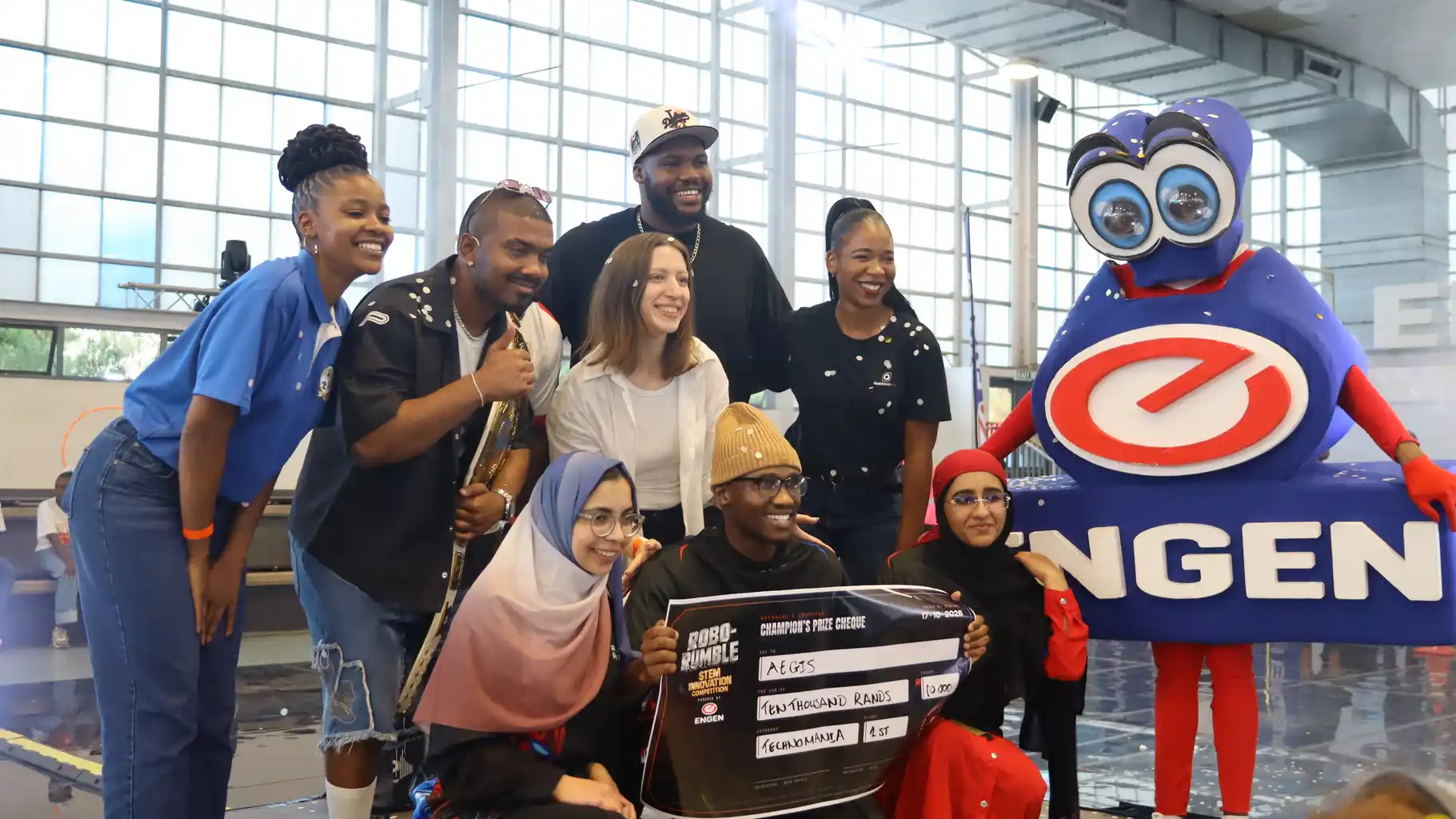
JOHANNESBURG, South Africa – Monday, 19 October 2026 – AlgoAtWork brought young innovators from across South Africa to Soweto on Saturday, 17 October, for the national finale of Robo-Rumble, its flagship robotics and engineering programme, where participants put their robotics, engineering and programming skills to the test. Powered by Engen, the competition gave young people a platform to showcase their technical abilities, creativity and problem-solving through practical challenges.
The event comes as South Africa continues to grapple with youth unemployment. Statistics South Africa’s Quarterly Labour Force Survey for the second quarter of 2026 reported an overall unemployment rate of 33.6%, with unemployment among young people aged 15 to 34 reaching 47.4%. Practical skills development initiatives like AlgoAtWork’s RoboRumble help young people gain experience, build confidence, and better understand how their interest in technology can lead to further learning and career opportunities.
“For us, Robo-Rumble is about recognising the potential that exists among young South Africans and creating opportunities for them to demonstrate it. Young people need more than exposure to technology; they need opportunities to experiment, solve problems and apply what they have learnt,” says Donnel Muchinguri, Lead for partnerships and projects at AlgoAtWork. “By giving participants, a platform to build, test and showcase their creations, we are helping them develop the confidence and capabilities to continue exploring opportunities in technology.”
The competition featured three categories, each designed to test different technical and creative abilities. Robo Wars challenged participants to design and build combat robots, Robo Grand Prix tested their ability to program autonomous vehicles to navigate a racing circuit, and Technomania provided young innovators with a platform to present their technical projects and ideas. As an open innovation category, Technomania allowed students to push their creative boundaries. Without prescribed problem statements, participants were encouraged to identify their own challenges, fostering independent research and out-of-the-box thinking.
As artificial intelligence (AI) and automation reshape the world of work, developing practical technology skills is becoming increasingly important. The IBM Institute for Business Value’s 2026 CEO Study found that 67% of surveyed South African organisations had appointed a chief AI officer, reflecting the growing strategic importance of AI in business. This shift reinforces the need to develop talent that can engage with emerging technologies and apply technical knowledge to solve problems. Robo-Rumble 2026 responded to this opportunity by giving young South Africans a platform to put their robotics, engineering and programming skills into practice.
Across the competition categories, participants applied engineering principles, troubleshot problems and refined their designs to improve performance. These experiences encouraged critical thinking, collaboration and resilience, while demonstrating how classroom learning translates into practical applications. The competition also allowed young people to exchange ideas with peers and explore possibilities in robotics, engineering and emerging technologies. By building a community of innovators and engineers, AlgoAtWork is creating a platform where young talent can truly belong.
Through its programmes and partnerships, AlgoAtWork focuses on unlocking Africa’s untapped talent, equipping young people with future-ready capabilities and connecting them to opportunities that drive progress. Robo-Rumble supports this ambition by creating an environment where participants can demonstrate their abilities, develop their skills and explore pathways into further education, employment and entrepreneurship.
Engen’s support for the competition highlights the critical role that private businesses and the broader private sector play in expanding access to practical science, technology, engineering and mathematics (STEM) learning opportunities. By partnering with skills development initiatives, private sector businesses can help young people gain exposure to technology and better understand how technical capabilities can translate into future opportunities.
“Developing the next generation of talent requires collaboration and investment in opportunities that allow young people to explore, experiment and build practical skills. Supporting initiatives such as Robo-Rumble helps create an environment where young innovators can discover their potential and develop capabilities that will be valuable in a technology-driven economy,” says Langutela Siweya – Senior Manage: Customer Loyalty and Digital Innovations (Engen)
Muchinguri says the competition’s value extends beyond the winners announced at the end of the day. “Winning is one part of the experience, but every participant has an opportunity to learn, overcome challenges and build confidence in their abilities. We want young people to recognise the value of their ideas and understand that there are pathways to continue developing their skills, whether through further study, technical training or entrepreneurship.”
For the participants, the competition also offered an opportunity to see what they can achieve through teamwork, persistence and practical application. Tuka Curious Minds, winner of the Robot Wars said: “Winning Robo-Rumble is an exciting achievement because it shows what is possible when you put your ideas into practice and keep working to improve them. The experience has motivated me to continue developing my skills and exploring opportunities in robotics and engineering.”
The winning teams in the 3 highlighted categories were:
- Technomania: AEGIS
- Robot-Wars: Tuka Curious Minds
- Autonomous Grand Prix: KG Bot
Robo-Rumble 2026 concluded in Soweto on 17 October, placing young South African innovators at the centre of a broader conversation about skills development, access to technology and participation in the digital economy. For participants, the experience provided an opportunity to demonstrate what they can achieve when given the space to put their knowledge into practice.