The most striking aspect of the 2026 MTBPS is that government managed to stick to its guns, ensuring that South Africa’s government debt has peaked and is now falling, despite the US-Israel war against Iran being launched three days after the February Budget.
Gross debt stabilised at 78.4% of GDP in 2025/26, below the 78.9% peak projected in February. The primary surplus is set to rise from 1.7% of GDP this year to nearly 3% by 2030, with the deficit narrowing to 2.5% of GDP.
That discipline is being rewarded: the rand has remained resilient, strengthening and becoming less volatile despite the sharp rise in global oil prices resulting from the war on Iran, and the ratings agencies are taking notice. S&P upgraded South Africa in November 2025, Fitch followed in June 2026, its first upgrade in almost 21 years, and Moody’s moved to a positive outlook. BLSA expects further upgrades after these figures, which would lower borrowing costs for government and business alike.
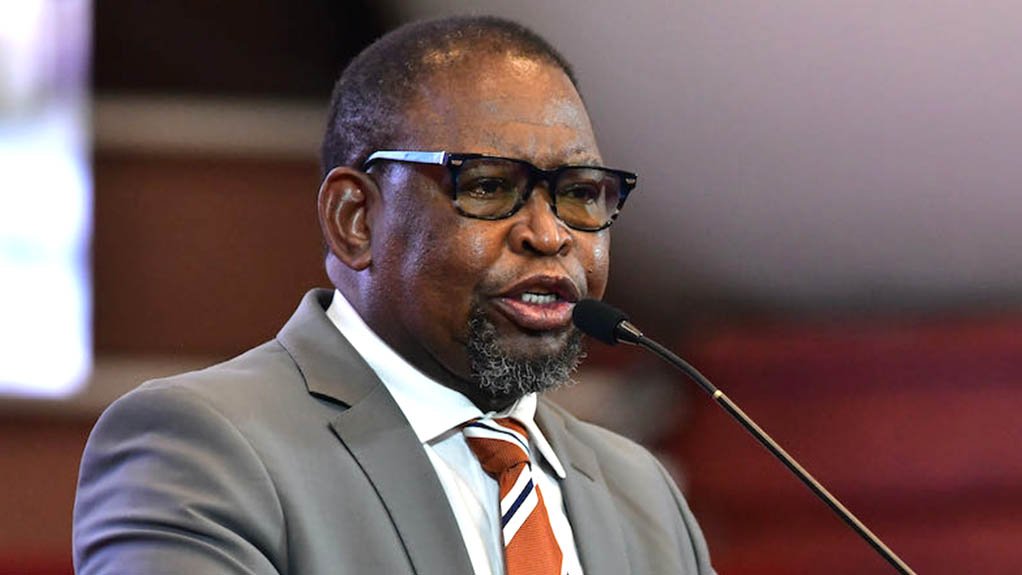
BLSA is also encouraged by the draft fiscal anchor legislation released for public comment, with tabling in Parliament expected in 2027. While there will not be a rigid numerical rule, Finance Minister Enoch Godongwana said the legislation requires each administration “to commit to its own fiscal objectives”, report against them at every Budget and explain any material deviation to Parliament.
“BLSA is happy with this approach,” says Mavuso. “Credibility comes from strong institutions, and an anchor that holds each administration to account at every Budget should lead to lower borrowing costs and greater policy certainty.
Economic growth
The core problem remains the lacklustre economic growth. Treasury cut its 2026 forecast to 1.2% from 1.6% in February and projects 2% only by 2029. Minister Godongwana reaffirmed that government’s strategy for faster growth and healthier public finances remains anchored on four pillars: maintaining macroeconomic stability, implementing structural reforms, building state capability and supporting growth-enhancing infrastructure.
“BLSA fully supports these goals and will continue to assist government wherever it can in achieving them,” says BLSA CEO Busisiwe Mavuso. “Faster economic growth is the best way to address South Africa’s severe unemployment crisis. This is a long-term process, which is why every effort to accelerate delivery matters, especially on structural reforms and infrastructure.”
On structural reforms, Minister Godongwana reaffirmed that the priorities in water are to restore operational performance, strengthen governance and technical capacity, reduce water losses, improve revenue collection and reform how water infrastructure is financed. In electricity, he reaffirmed that restructuring Eskom and establishing an independent transmission operator will support a more competitive market, attract new investment in generation and accelerate expansion of the grid.
On infrastructure, his statement that the goal is “not simply to spend more” but “to spend better”, with spending shifting towards productive investment, is important. He pointed to the new Infrastructure Finance and Implementation Support Agency, which consolidates existing units and is already supporting projects with a potential investment value of more than R207bn. Fiscal support approved through the Budget Facility for Infrastructure now stands at more than R100bn, and the infrastructure bond has raised over R14bn. He also highlighted the fast-tracking of public-private partnerships in municipalities, with amended regulations now before Parliament, and progress on the Credit Guarantee Vehicle, which is due to be operational by 2027. He added that maintaining existing assets matters as much as building new ones.
Revenue
Gross tax revenue for 2026/27 has been revised up by R17.1bn from the February estimate, on stronger corporate tax, dividends tax and VAT collections. Treasury attributes a large portion of the improvement to higher commodity prices, and expects those gains to dissipate over the medium term. Even so, revenue has strengthened while growth was downgraded to 1.2% from 1.6%.
Minister Godongwana said the stronger revenue meant spending this year will rise by R45.5bn from the February Budget. The adjustments budget includes R6.2bn for unforeseeable and unavoidable expenditure, mostly disaster relief and rehabilitation; R823m for deploying troops to assist police against gang crime and illegal mining; and R516m for the Madlanga, Kampepe and Nkabinde commissions of inquiry. The contingency reserve also rises to R10bn to respond to risks including El Niño.
Local government
BLSA has identified local government’s finances as one of the main hurdles to growth, while acknowledging that the challenges in this sphere are complex and will be difficult to overcome. Minister Godongwana outlined the reform agenda to address the problems. An important element of that is the first comprehensive modernisation of the Municipal Finance Management Act – this is long overdue; it is the first review of the legislation in 23 years and will require municipalities to demonstrate that their budgets are genuinely funded. It also strengthens revenue management and accountability, allows earlier intervention in distressed municipalities and introduces stronger mechanisms to investigate financial misconduct and recover losses.
He projects local government’s share of non-interest spending will reach 10% over the medium term, which he described as a significant milestone, and a further R3.5bn over the same period is being added for the wider rollout of smart meters to improve revenue collection. A review of municipal funding found that most municipalities spend too much on running costs, leaving too little for long-term infrastructure and maintenance. The review’s final report, due by the end of the year, will recommend a practical funding model.
“Local government is where reform meets the people it is meant to serve, so we welcome the Minister’s focus on results as well as resources,” says Mavuso. “Requiring municipalities to demonstrate that their budgets are genuinely funded, and a funding review that will recommend a practical model by the end of the year, address problems that have been left for too long and have stopped many municipalities from delivering services. We need a capable local government to get the economy growing faster.”
Synthetic Financial Centre
South Africa’s competitiveness as an international financial centre has long been constrained by its exchange control framework, which inhibits financial institutions in managing foreign-currency assets and conducting cross-border financial activity. This has seen the country’s ranking on the Global Financial Centres Index deteriorating: Johannesburg dropped from 59th in 2016 to 95th today, and Cape Town entered the index at 56th in 2019 and today ranks 93rd. In contrast, Mauritius climbed from 79th to 55th.
The Synthetic Financial Centre (SFC) is designed to address this. Announced by the SA Reserve Bank immediately after the MTBPS, the reform will allow authorised financial institutions to manage foreign-currency assets and conduct cross-border financial activity from South Africa, opening opportunities to attract international investment mandates, expand financial services exports and create employment.
BLSA believes this is an important step towards increasing SA’s competitiveness – it will enable asset managers, stockbrokers, private equity firms and other financial institutions to compete for international mandates, which we have been losing to countries with far smaller markets.
Conclusion
Overall, BLSA regards this as a good MTBPS. The fiscal strength South Africa has rebuilt is now visible in debt that is falling, a deficit better than expected in February and a growing primary surplus. That strength gave Treasury room to ease the cost-of-living pressure from the oil shock with temporary fuel relief and to protect frontline services, without compromising the sustainability of the budget.
Separately, BLSA welcomes the additional funding for the Border Management Authority and the SARS modernisation programme, which should help in the fight against the illicit economy. The minister has cited estimates that the illicit cigarette trade costs the fiscus more than R27bn a year in lost tax revenue.
It is important that the whole of government now works together to accelerate momentum in the structural reforms, infrastructure delivery and state capability that are designed to improve long-term economic growth.
Mavuso says: “Business and government have shown in recent years how much reform can be achieved when we pull in the same direction. BLSA will keep doing its part, from offering private-sector expertise on infrastructure to tracking every reform deliverable through our Reform Tracker. The core focus from here is to ensure that the stability translates into delivery.”