By Mzukona Mantshontsho
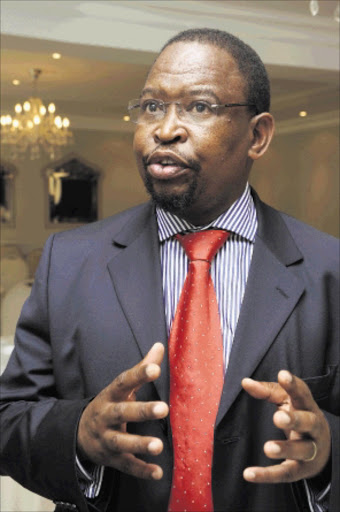
Today, South Africa’s Finance Minister Enoch Godongwana will table the 2026 Medium-Term Budget Policy Statement in Parliament.
The mini budget updates this year’s revenue and spending estimates and signals how the government will allocate money in the February 2027 budget.
Economists expect tax revenue to beat estimates by R50-billion or more, but growth remains weak, with GDP contracting in the second quarter ofvthe year.
The R370 Social Relief of Distress grant has not increased since April 2024, sits well below the food poverty line and is funded only until March 2027.
Its future, along with the pressure for fuel levy relief, will test what the Treasury will prioritise.
I spoke to Dr. Nombeko Mbava about her thoughts and insights on the Mid Term Budget Statement, she is an independent public finance expert based in Cape Town. She was Chairperson of the Financial and Fiscal Commission (FFC) from 2021 to 2026. The FFC is the independent body set up under Chapter 13 of the Constitution. It advises Parliament on how nationally raised revenue is shared between national, provincial and local government.
Her work covers the fiscal framework, the division of revenue, and provincial and municipal finances.
She holds a PhD in Public and Development Management and an MBA both from Stellenbosch University, and a BA in Economics from Smith College in the United States.
She can comment on: the Medium Term Budget Policy Statement and the fiscal framework; what the budget means for provinces and municipalities; the cost and funding of social grants, including the SRD grant; gender-responsive budgeting; and health financing.
Conflict of Interest Declaration
Dr Nombeko Mbava holds a state-facing governance role as Chairperson of the Financial and Fiscal Commission (FFC), appointed to lead a statutory advisory institution that engages directly with government and Parliament. She has also served on public sector boards, including the MDDA. For this reason, she should be treated as a governance and public finance voice, not a civil society accountability voice.
Hundreds of schools still utilise unlawful and unsafe sanitary facilities, over a decade past the deadlines set by previous versions of the Norms and Standards for School Infrastructure. Hundreds more remain without reliable access to water, electricity, sufficient classrooms, or other critical infrastructure. The Minister estimates the cost to correct this backlog to amount to at least R140 billion, while funding for education infrastructure sits at R17.4 billion this year with significant decreases presently projected over the medium term after the “merger” of the School Infrastructure Backlogs Grant, how do you see his penning out ?
School infrastructure
The Department of Basic Education told Parliament in June that the main infrastructure grant gives about R49 billion over the next three years. Against a backlog of R140 billion, that leaves a gap of about R90 billion in this term of government alone. The department itself said these amounts are not enough to close the gap.
Combining the backlogs grant into the Education Infrastructure Grant removes money that was set aside only for the worst schools. Provinces now have to choose between new classrooms, repairs and toilets from one smaller pot. When choices like this are made, the poorest rural schools often wait the longest.
I would ask for three things. Ring-fence a clear amount for safe toilets and water inside the grant. Publish a school-by-school list so communities can track progress. Stop provinces from returning unspent infrastructure money while children still use pit latrines. Unsafe toilets are a matter of children’s lives and their constitutional right to basic education.
The R370 Social Relief Grant
The grant now runs to 31 March 2027 at R370 a month, and more than eight million people rely on it. I expect another extension, because ending it suddenly would push millions deeper into hunger. An increase is harder. Government has said there is little fiscal space. But R370 has not changed since April 2024, so each year it buys less food.
The bigger question is what comes after the grant. Government has said it wants to link it to work. That is the right direction if it is done carefully. My priorities would be paid public work that fixes things communities need, such as school repairs and municipal maintenance. I would add skills training linked to real jobs, and support for small businesses in townships and rural towns. This must include older jobseekers, not only the youth. Many people in their 40s and 50s have lost work and have no path back.
Fuel Prices and the Cost of Living
Petrol 95 inland rose by R3.33 a litre on 7 October to R30.25, and early data points to another increase in November. Higher fuel costs push up taxi fares and food prices, and poor households feel this first. In April, Treasury cut the fuel levy by R3 a litre. This cost about R17.2 billion in lost revenue, and it was later partly brought back. So the Minister has limited room. I expect any relief to be temporary and paid for by savings elsewhere, not a permanent cut.
A levy cut helps everyone who buys fuel, including people who can afford it. Relief that targets taxi commuters and the zero-rated food basket would help the people under the most pressure. The fuel price structure and the slate levy are also worth reviewing. People need honesty about what government can afford, and relief that reaches those who need it most.
Image: Sowetan Live