By Juan Visser, Regional Director, Sub-Saharan Africa, International Education, Cambridge University Press & Assessment
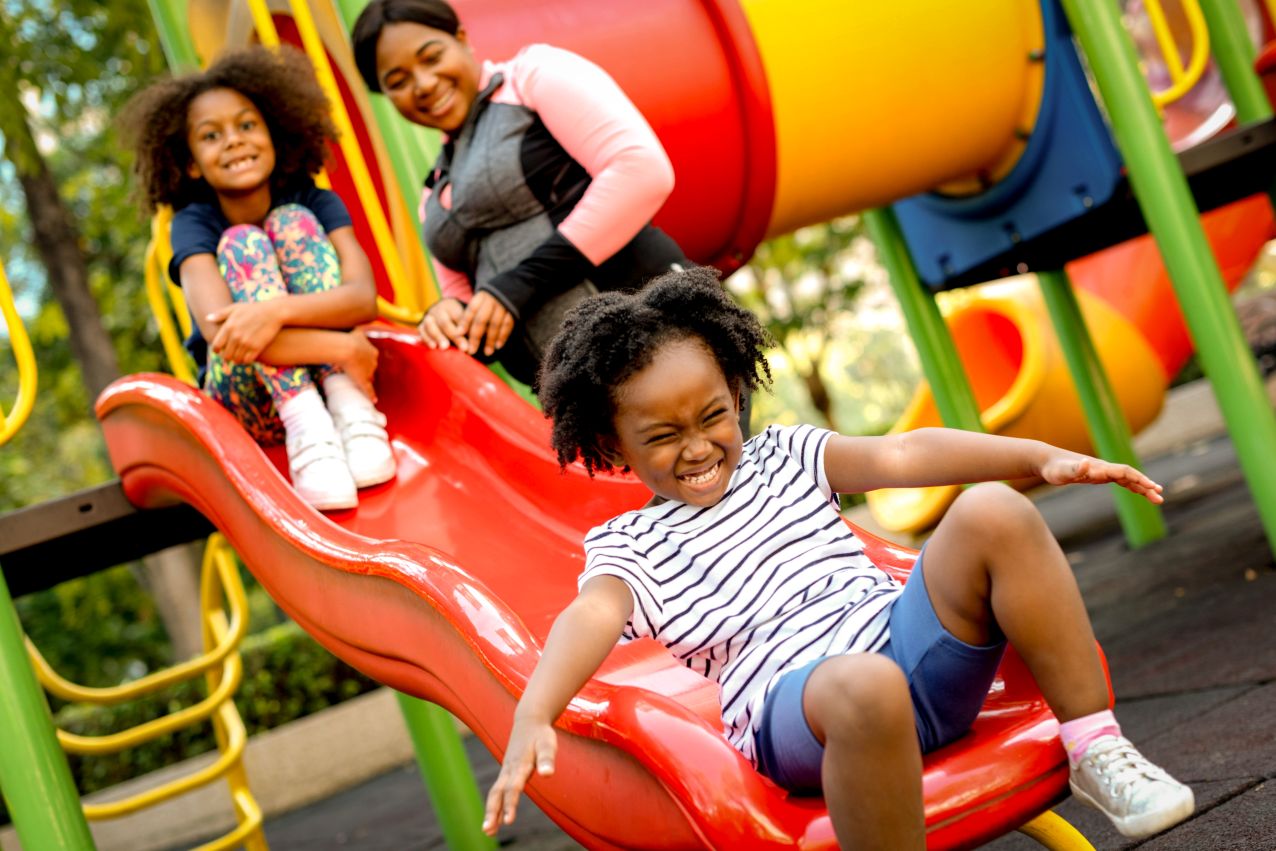
Ask any preschool teacher and they’ll tell you that their class environment is a vibrant one, filled with the sounds of giggles, games, music, clattering feet, and occasional tears. Is it overwhelming? Yes, sometimes. But this bustle of play-based activity is the essential ingredient to childhood learning.
Giving children a strong start
The first few years of a child’s life are critical, because this is when the brain is developing at its fastest rate, and when children are most receptive to learning. Numerous studies, including the OECD’s International Early Learning and Child Well-being Study, have highlighted the importance of giving children a strong start in the early years to improve their education outcomes and wider wellbeing in later life.
Research also shows that certain characteristics increase the impact of early years provision. One of these is play-based learning, as the International Education group at Cambridge University Press & Assessment identified during the development of its Cambridge Early Years programme.
Why is play so important?
Play is generally seen as something to enjoy, but it helps children to make significant progress in all areas of development. Play promotes executive function – the mental skills that help us manage everyday tasks – which encourage positive behaviours for learning, such as focus, self-regulation and resilience. Play-based learning also supports cognitive and physical development by allowing children to build their working memory and make connections through actively taking part.
High-quality early years education embraces a mix of engaging activities that are designed to teach valuable skills and behaviours. A teacher reading a story out loud develops children’s listening skills and builds an understanding and appreciation of spoken language. Simple number and counting games teach mathematical literacy. Role-play activities, such as dress-up games encourage sharing and empathy, while a pretend shop gives children a chance to develop their social and communication skills and learn about money.
Teachers make all the difference
Play-based learning really comes alive when children are free to explore, try new things, and follow their own interests. However, this freedom is not without structure: the most effective teachers are like friendly coaches on the sidelines. They join in, nudge ideas along and spark new ways of thinking, engaging just at the right moment to help out, or cheer children on. This kind of encouragement creates a nurturing environment where children can strengthen their problem-solving skills and self-control – all important steps in their education journey.
To get the best out of playful learning, a skilled teacher allows children to try out lots of different activities to achieve the learning goal. When teachers understand their learners, by carefully observing their interests and behaviours during play, they can create spaces full of excitement and possibilities. They make sure every activity is appropriate for the child, knowing that childhood development doesn’t always happen at the same pace for everyone.
Early childhood education is a critical building block for future success
The belief that ‘formal learning starts later’ strongly shapes early development practices in Sub-Saharan Africa. However, awareness of Early Childhood Education (ECE) is increasing across the region, with governments recognising the intrinsic importance of ECE in children’s development. Over 1,800 educators from Sub-Saharan Africa attended this year’s Cambridge Early Years Online conference on play-based learning – which attracted nearly 10,000 teachers and school leaders globally – demonstrating the desire to learn new approaches from early years experts and peers worldwide.
Despite increased awareness of the value of early years education, compulsory schooling still receives the lion’s share of funding and policy priority, with much early childhood education still taking place in unregistered and unregulated venues. The shift to offering a formal Early Years programme, with structured quality standards and a consistent global framework that centres can apply locally, is a goal for governments across the continent to work towards.
The importance of coherence in early years education is one of the guiding principles behind the Cambridge Early Years programme. The curricula, resources, assessment and training are all aligned to deliver maximum impact. Taking into account cultural norms and home language use, early years practitioners can decide what works best for their setting and adapt the programme to diverse social realities and English language levels.
Collaboration will help embed early learning across communities
Some of the major challenges facing early years education in Africa include limited funding, shortage of trained early years teachers, uneven infrastructure and disparities between urban and rural areas. To implement effective ECE programmes across Africa, governments and the private sector must work collaboratively. African countries can learn from high-performing systems globally that promote the value of strong teacher professionalisation, coherent early‑years governance and play‑based learning, and by working with education partners like Cambridge on curriculum design and professional development.
By investing in Early Childhood Education programmes, nurturing skilled teachers and creating environments where children can explore and learn safely, communities and countries can empower their youngest members to thrive. And, as Africa moves to embrace progressive approaches and global best practices, every child stands to benefit.
About Cambridge
Cambridge University Press & Assessment is part of the University of Cambridge. Our International Education group works with schools worldwide to build an education that shapes knowledge, understanding and skills. Together, we give learners the confidence they need to thrive and make a positive impact in a changing world. We offer a globally trusted and flexible framework for education from age 3 to 19 (the Cambridge Pathway), informed by research, experience, and listening to educators.
With recognised qualifications (such as Cambridge IGCSE, International AS & A Levels, and the AICE Diploma), high-quality resources, comprehensive support and valuable insights, we help schools prepare every student for the opportunities and challenges ahead. Together, we help Cambridge learners be ready for the world.
Learn more at www.cambridgeinternational.org