By Mzukona Mantshontsho
On July 7, 2026, the Constitutional Court unanimously ruled that asylum seekers cannot be barred from the asylum system, detained, or deported over procedural errors such as entering the country irregularly or missing the deadlines for reporting at refugee reception offices.
On September 28, the Department of Home Affairs directed refugee reception offices to accept applications from everyone seeking protection.
The anti-immigration group March and March blocked offices in protest, and on Thursday, October 8, protests turned violent in both Durban and Soweto.
The next day, the department of Home Affairs withdrew the directive, saying offices had been “overwhelmed” and officials had been put at risk.
The ruling still stands, and the department says it will start a “fresh process” to comply. The government blames disinformation for the backlash: the ruling does not grant refugee status or permanent residence despite a social media buzz to the contrary. For now, it is unclear how people seeking protection can apply.
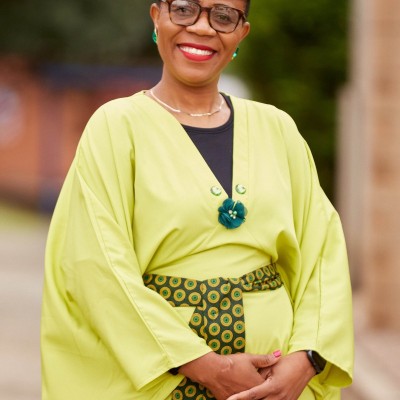
I spoke to Sabina Taderera, whoaims to foster social cohesion and realise human rights and peacebuilding agendas. Her work involves raising awareness and closing cultural gaps through meetings, dialogues, trainings, and activities in a manner that is accessible and that connects women and girls. She intends to increase the involvement and contribution of women and girls to the peace and security agenda regardless of their culture or religion.
Taderera is the Director and Founder of Angel’s Nest Southern Africa, an organisation championing human rights and peacebuilding agendas. She is also the Secretariat for Southern Africa Network for Immigrants and Refugees (SANIR), where she advocates for the rights, protection, and access for refugees, migrants and displaced people.
Taderera has undergone training on gender-based violence and discrimination against women through the African Civic Engagement Academy at the University of Georgia, has completed mediation or facilitation training from the African Centre for Constructive Resolution of Disputes, is a trained trainer, and has a certificate from the Asia-Pacific Centre of Education for International Understanding.
Taderera is a health equity fellow -a leadership development programme for health equity in South Africa with the Atlantic Fellows for Health Equity in South Africa (AFHESA), based at Tekano. She also holds a certificate in theology.
Did the South African government leave things too long, with porous borders, corrupt officials at Home Affairs and the Border Management Authority?
I believe the government has allowed longstanding problems in border management and the asylum system to persist for too long. Corruption, weak enforcement, and delays at Home Affairs have been allowed to go on for too long without being addressed, and officials responsible for wrongdoing have not been held accountable. However, we must distinguish between immigration control and the refugee or asylum crisis. We have seen that refugees genuinely seeking protection, with a genuine opportunity to register their claim, have it assessed individually, and receive a decision without unreasonable delays, have been left in limbo, which we are referring to as “Crisis” today.
South Africans have expressed the sentiment that their government is more concerned about foreign nationals than South Africans?
Documentation issues are concerning, whether someone is a South African or a refugee, and I believe the issue of not being documented does not take away opportunities from all people. I understand why South Africans are frustrated. If millions of citizens are struggling with identity documents, the government must indeed take the issue with the seriousness that it deserves.
No South African should feel neglected by their own government. At the same time, I would challenge the idea that seems to say protecting refugees means putting them before South Africans. These are not competing responsibilities. The real question is whether Home Affairs is delivering services efficiently and fairly.
My message here is simple: South Africans who are not documented deserve immediate attention; this does not mean that while the attention is being given to the 4 million, we let the refugees suffer. Refugees deserve dignity, and the government, which is responsible for documenting people, must be held accountable for serving everyone according to the law. South Africans should not carry the cost of government failures, and refugees should not be blamed for them.
Are we Xenophobic as South Africans, is this label justified?
I would not label ALL South Africans as xenophobic. South Africa has a long history of solidarity, but we cannot deny that xenophobia exists, as we have seen it result in violence against foreign nationals. I think there is a missed opportunity to distinguish legitimate concerns about immigration from blaming people simply because they come from another country.
Criticizing government policy is not xenophobia; attacking, excluding, or discriminating against people because of their nationality is. Not every foreign national is undocumented, and not every asylum seeker is abusing the system.
Do we pull out of the United Nations conventions that are not serving South Africa anymore?
Certainly, entering a country illegally can be an offence, and South Africa has every right to control its borders and enforce its immigration laws. But we must distinguish irregular entry from those who are seeking asylum. We must recognize that people fleeing persecution may not always be able to enter through regular channels, as a person fleeing may not have an opportunity to get their identity document or passport.
Withdrawal from the United Nations convention will not automatically solve the immigration problem. Instead of looking for solutions that are not connected to the problem, I believe what should be fixed is the system: fight corruption and process asylum claims efficiently.
We cannot allow the asylum system to overwhelm the country, but we must manage it lawfully. The solution is effective enforcement, fair and timely decisions, and accountability—not simply abandoning our international responsibilities.
How do we make sure that the people who deserve protection can apply and be protected?
If the government works on eliminating corruption, which is openly happening, verifies applications properly, and ensures that genuine refugees are protected, while those who do not qualify are dealt with according to the law, this would enable people who need protection to apply and be protected.
The goal is simple: protect those who genuinely need protection, prevent abuse of the system, and restore public confidence through accountability and the rule of law.
What should be the messaging from government with regards to the asylum crisis?
Government is silent in the midst of all the concerns being raised, the violence and attacks that have erupted across the country.
No communication has been received from the government that honestly addresses the asylum issue while protecting South Africans’ interests and respecting refugee rights. There is no explanation of what the government is doing about border control, corruption, backlogs, and undocumented people.
These messages must reach ordinary people through the same channels that are used to campaign, such as community meetings, local radio, churches, schools, municipalities and social media, using accessible local languages. Government must move beyond promises and show measurable results.
When people see a system that works, trust can be rebuilt, misinformation reduced, and tensions between South Africans and foreign nationals addressed.
How do we come out of this asylum crisis with fewer tensions with the rest of the African continent and the World?
We need to adopt a collective, diplomatic, and human-rights-based approach that promotes dialogue, cooperation, and shared responsibility among African countries and the international community. Governments should respect international refugee protection laws, address the root causes of forced displacement, fight xenophobia, and ensure that refugees are not used as political tools. Refugees and refugee-led organizations must also be included in decision-making processes affecting their lives. Ultimately, we must replace blame and confrontation with solidarity, mutual respect, and regional cooperation, ensuring that both refugees’ rights and host communities’ concerns are addressed with dignity and fairness.
Can we blame this asylum crisis on disinformation or misinformation?
I would not blame the “crisis” as you call it, on disinformation and misinformation. The media has seriously contributed to promoting misinformation and disinformation by publishing unverified information. Government, media, and civil society should provide verified information about asylum seekers’ rights, responsibilities, and contributions.
To avoid this from spreading further than it has already, I believe that action or steps should be taken against individuals and platforms spreading incitement, xenophobic messages, and dangerous misinformation.
We should encourage dialogue between local communities, refugees, and authorities to address concerns peacefully, and most importantly, journalists and social media platforms should verify information before sharing it.
Authorities should respond to community grievances through dialogue rather than allowing tensions to simmer till they escalate to violence, which we have seen in the previous months, taking lives, destroying infrastructure, and destroying communities that had thrived for years.
In conclusion: I believe that we cannot sustainably resolve the asylum or migration crisis through violence, intimidation, political rhetoric, or blaming vulnerable populations.
We need political will, effective asylum management, regional solidarity, and respect for human dignity. The goal should be to create conditions where no more people are forced to flee their country of origin and where those who have sought protection can live safely and contribute meaningfully to society.